

My career thus far.
For more than two decades, I've worked across the systems that shape how organizations communicate, compete, and grow.
My early career developed within fashion, luxury, and consumer brands, like Cole Haan, Michael Kors, Theory, 7 For All Mankind, and Casper Sleep Inc. where I worked across product campaigns, sales programs, event strategy, brand development, customer positioning, and brand identity executing market strategy into multimillion-dollar outcomes.

Grand Opening - Casper Sleep Inc.
At Casper Sleep, my brand strategies focused on organizational psychology with the development of retail-sales policy and team guidance designed to create consistent brand experiences based on brand principles, team decision-making, and customer experience.
What began as work in communication and brand increasingly became work in strategy: understanding not only how organizations presented themselves, but why customers responded, how teams translated strategy into action, and how commercial decisions moved through the larger environment surrounding a business.
My work placed me beyond campaigns and into the operational structures behind them. In Chicago, my role went beyond strategy, where I worked with local small and mid-sized businesses, teaching teams how strategy informs client policies, clarifying responsibilities, improving collaboration, and building processes that could evolve to meet market needs.
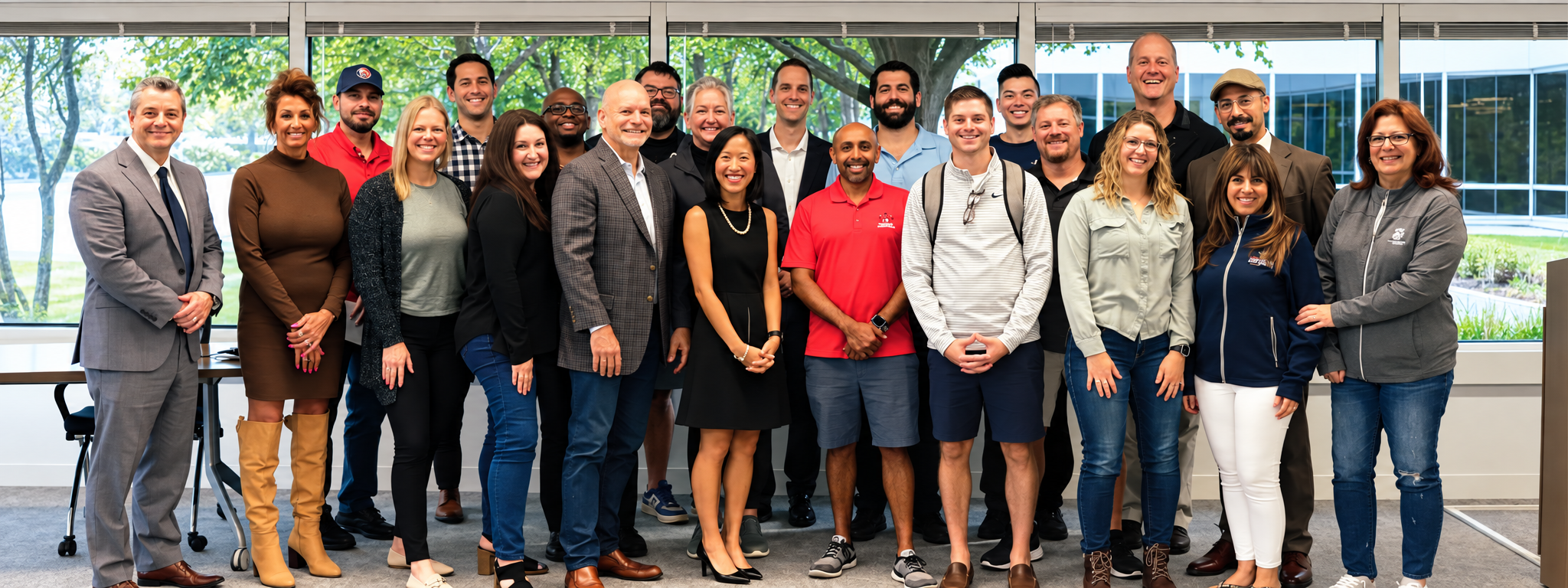
Schaumburg Business Association Conference - Brand Strategy Q&A - Chicago
My creative background led me to Chicago media and advertising houses, where my foundations in behavioral economics and market research shaped client brands' omni-channel ad campaigns. This research included audience, demographic, and psychographic analysis that informs brand messaging, cultural signals, and buying decisions.

GSC Commercial Ad - written and assistant directed by Gabriel - Courtesy Screenax
My creative directorship led teams in translating those strategies into advertising campaigns across all digital platforms, e-commerce systems, commercial communications, and on-brand content ecosystems. I worked with creative teams, guding and supporting the process of ideating, conceptualizing, writing, developing, launching, refining, training, and supporting the people responsible for bringing the work into the market.
“Strategy was never something I wanted to leave in a presentation. I wanted to know what happened when it met the real world.”
That continuity between analysis, leadership, and execution became a defining feature of my work: understanding systems, building teams, designing the message, carrying it into the market, and remaining present long enough to respond to the performance that followed.
I joined Interactive Strength Inc., a national fitness tech brand, during its start-up years. My role encompassed every major operational function of the organization as it began to scale. I went to work building the communications department and writing the policy guide that secured the voice of the brand's internal and external communications. Creative, operations, human resources, and sales utilized these insights as I developed the company’s international enterprise acquisition program workflows resulting in multiple locations across the Middle East and Northern Europe.
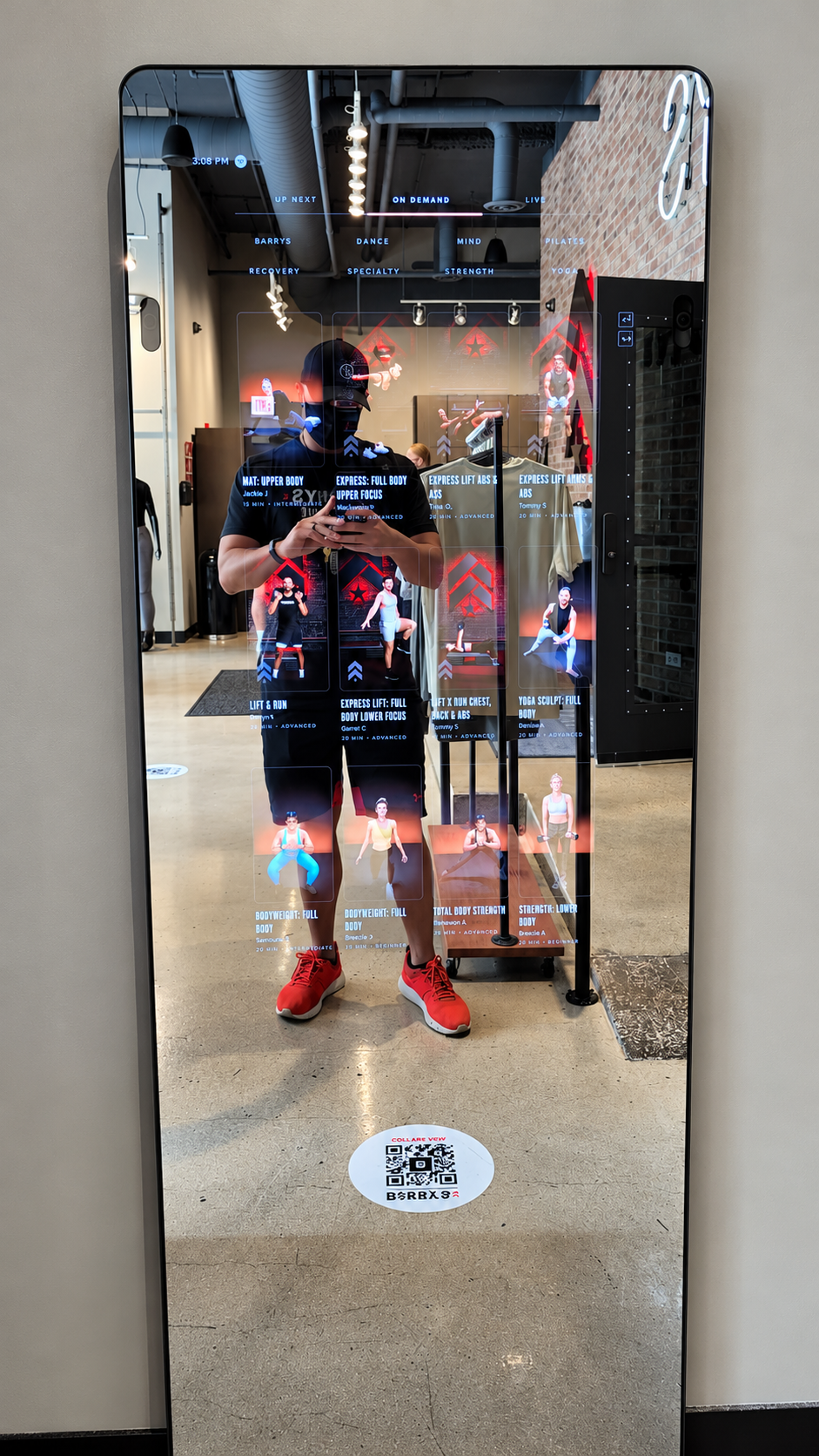
Securing Interactive Strength's On-Site Event Partnership with Barry's, Chicago
I became known throughout the company as a calm anchor across every department. Department heads turned to me for strategic direction, slowing complex problems down, identifying what their teams actually needed, and translating those needs into workable processes. I mentored leaders, helped teams clarify responsibilities, and developed inter-departmental workflows that allowed different priorities and technical languages to work together as part of a larger coordinated system. Two years later, I helped prep each department for the company's public offering.
Different industries presented different problems. But increasingly, I found myself examining the same underlying question: What is actually causing this organization to behave the way it does?
That systems perspective carried into technology, emerging markets, and increasingly complex competitive environments with highly regulated legal infrastructure.
My next challenge came in the form of market-entry strategies and industry analyses for SaaS startups, AI-based communication platforms, and an aviation company entering the private-aircraft repair and parts-distribution market.
Each field required technical research across federal regulatory frameworks, international market risk, competitive conditions, and operational exposure. I identified market opportunity while understanding the legal, structural, and operational realities that determined whether opportunities could responsibly be pursued or if they simply cost too much to start.
I saved each client millions, preventing rushed service launches and pre-developed software deployment.
Some of my most formative work happened far from national brands and enterprise programs. Throughout the years, I worked closely with independent businesses and first-time founders whose strategic problems were deeply personal.
I helped struggling family-owned businesses with financial planning and logistics systems, and built new product offerings to generate needed margin. I spent weeks teaching new founders the first stages of growth including how to hire, train teams, define their organizations, articulate strategy, and build brands from the inside out. This work was ocassionally pro bono, helping owners reconsider pricing, locations, positioning, operations, and the decisions necessary to keep the business alive.
“I'm not driven by the money, it's knowing these families can save their business and stay afloat, that's what matters most to me."
I recall one winter evening in Chicago, after a formal strategy meeting with a new founder, realizing strategy was not always in the numbers. The quietly anxious founder placed their head in their hands and wondered aloud whether they were charging too much for their services. "Am I expecting too much from my clients?" They asked themselves. "Maybe I should lower my prices and take the hit on my margins." After a few more questions, we realized they were about to collapse the value of their business and compromise their own value as an expert.
That distinction changed the conversation and the brand strategy. The result was a product-tiered offering built around a new market strategy that centered the value of their expertise and taste. In a single move, they were able to feel confident again, their business was the proof, not the burden.
“The only standard this person was failing was an impossible one they had made up in their head years ago.”
Moments like that altered the way I understood strategic work. The founder could not always be separated cleanly from the business. The business was often carrying the founder’s assumptions about value, leadership, accomplishment, risk, identity, and success. And once those assumptions became visible, the same market data could suddenly be understood differently.
My understanding of founders has been shaped by fifteen years of building Crown & Coil, my independent publishing and creative venture.
I spent over a decade building production teams from the ground up, assembling and leading writing teams, coordinating collaborators across different forms of media, developing internal production processes, and creating distribution workflows capable of supporting wholesale relationships and direct-to-reader sales. I have led Crown and Coil in publishing, film, audio, performance, production, distribution, and audience development. The results are international book sales, on-going commercial licensing royalties, and speaking engagements.
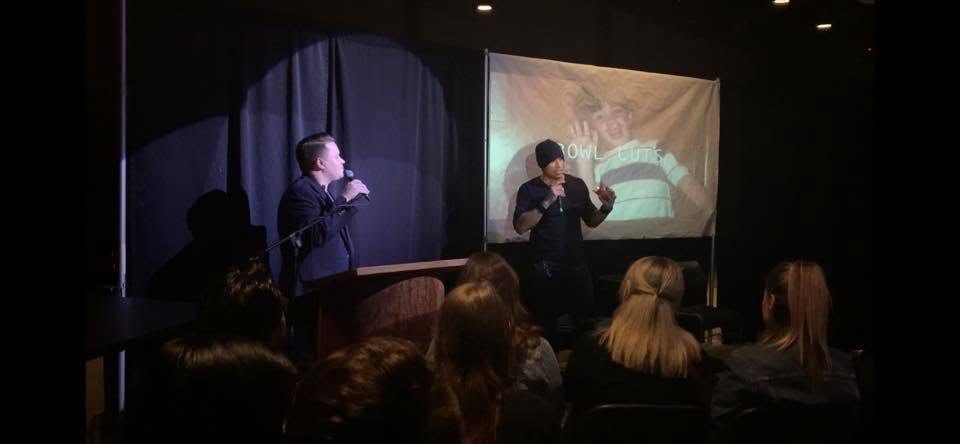
Speaking at a Film Production Q&A - Houston TX
That experience placed me on the other side of the advisory relationship. There was no client to hand the recommendation to once the strategy was complete. I Oexperienced directly what it meant to lead creative teams through uncertainty, maintain standards under limited resources, coordinate production and distribution, develop audiences, negotiate commercial relationships, and continuously adapt the organization without losing the original vision behind it. Most importantly, business was not a number on a page; it was the livelihoods of those who committed to my leadership.
Crown & Coil taught me one of the more unforgiving realities of founder-led work: You can pour extraordinary amounts of passion, love, time, and effort into something that means everything to you and the market may still not care.
Not necessarily because the work has no value. Because the market may not yet understand it.
“You can pour all of your passion, love, time, and effort into something that means the world to you, and the market will not care because it doesn’t understand.”
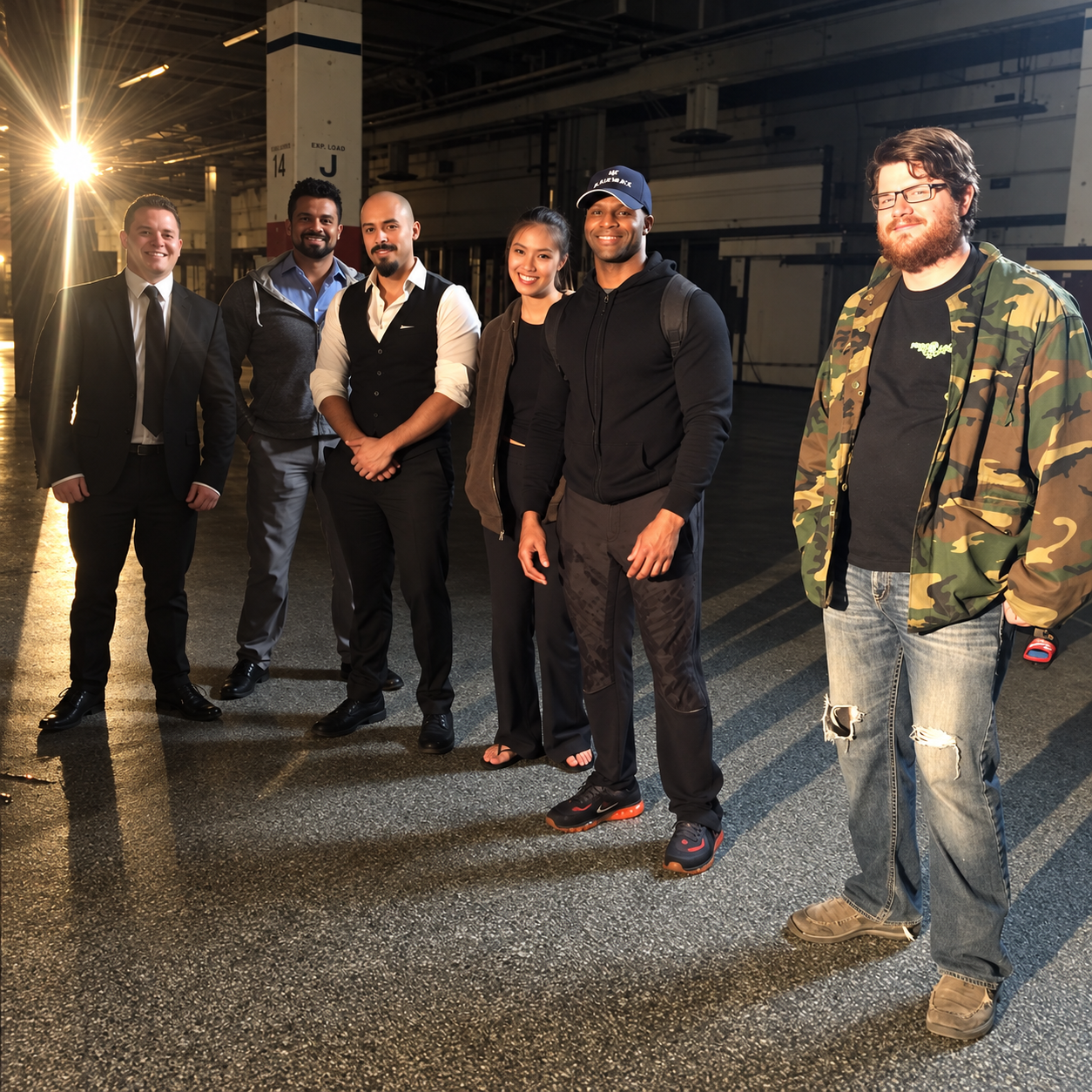
On set with the cast during a short-film production - Courtesy Row 7 Films
That realization sharpened my understanding of positioning, meaning, communication, and value. Effort is not self-explanatory. Value has to become legible. And when a market finally understands what something is, why it matters, and what it can contribute, it can begin to understand its value.
Founderhood also changed the way I understood the relationship between a person and the business they build.
“Founders are the origin point of business. The business is an extension of the founder and that’s the point.”
For me, a founder-led business often carries the values, judgment, history, ambition, fears, taste, and convictions of the person who created it. Understanding every facet of the founder reveals more about their business than any spreadsheet ever could.
Schedule your free 30-minute call.
book a call
A new way of seeing business
Experience Loxstill's Curated Behavioral Strategy process through a client's experience.
As always, all names and entities have been changed to maintain absolute client confidentiality. Any similar mention of real businesses, individuals, or situations is strictly coincidental.
Case StudyOrganizations do not struggle because they lack information alone. They may possess the reports. They may understand the competitive threat. They may know what should happen next. And still, they hesitate.
My work increasingly incorporated behavioral economics, culture theory, semiology, and psychodynamic inquiry to understand those moments. I became interested not only in what a founder decided, but in how they interpreted information, how they experienced uncertainty, what they associated with gain or loss, what they believed leadership should look like, and what personal definitions of success were quietly shaping their commercial decisions.
“A strategy can be perfectly logical and still fail if it never reaches the person who has to act on it.”
That lesson came through experience. Earlier in my career, I built sophisticated strategies, market-entry structures, and presentations grounded in data and formal analysis. On paper, they made sense. And sometimes the clients did nothing with them. They nodded. They accepted the report. And the work stopped there. The realization was uncomfortable but important: analytical quality alone did not guarantee action.
The breakthrough often came later.
A meeting scheduled for an hour would become two. Then three. The reports would move aside. The presentation language would disappear. And the founder would begin talking about what was actually going through their mind.
“The first hour gave me the data. The second hour gave me the founder. By the third hour, we were finally talking about the decision.”
That was where strategy became human.
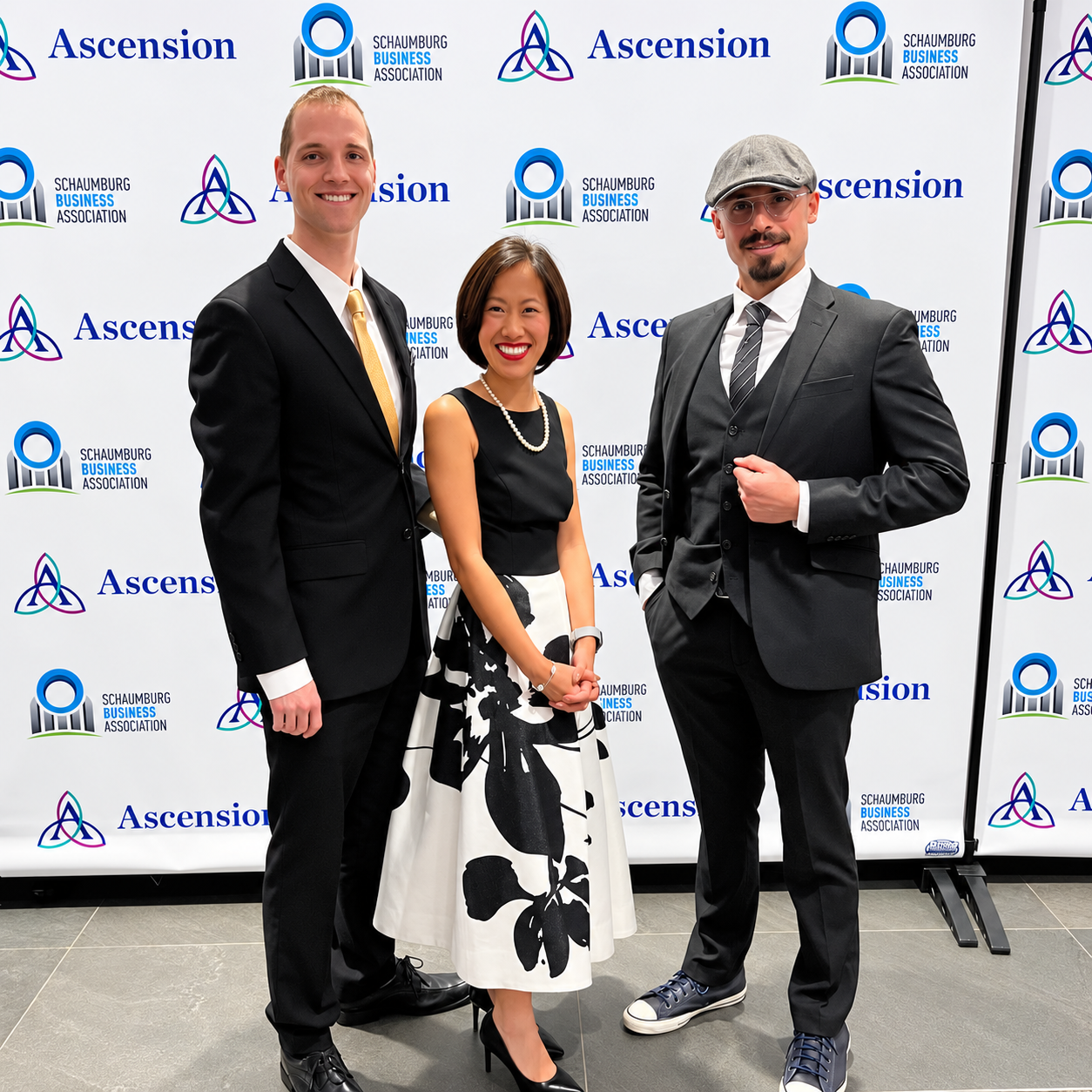
Attending the SBA Ascension Gala with Laura Lian and Dirk A. Vander Noot of Laura Lian Creative
Trust begins with fluency. Founders, especially experienced ones, have seen countless proposals, retainers, pitch decks, frameworks, and templated consulting outputs.
They know what being sold to feels like.
Trust begins when the strategist in front of them can explain what is being recommended and why every piece of the recommendation exists. That fluency creates relief that builds trust, trust leads to disclosure, and disclosure often reveals the problem the data could not.
A founder might admit that the sales team has no real system, a co-founder concealed an issue for years, the company has outgrown the person leading it or they simply no longer know what they want. I listen, place those revelations back into the strategic system, and keep asking questions.
“It stops feeling like consultant and client. It becomes founder to founder.”
From there, one of the most important questions is also one of the simplest: What do you want? The answer is often growth, scale, revenue, expansion. So I reframe the question. "Assume you get all of it. The company scales. The margins are strong. The operational problems are solved. You have arrived. Now what?"
That question strips away the safety of vague ambition. The founder must imagine the future beyond conventional business language.
“Growth is often a placeholder for a future the founder has not yet defined.”
There is the current state of the business and there is the current state of the founder. If both are misaligned, the founder often begins fighting the company they built.
In contemporary business culture, markets reward velocity. Founders are encouraged to move faster, scale sooner, optimize continuously, pursue growth, raise the target, and repeat. Standing still can feel like failure. I see it differently.
Stillness creates the space necessary to distinguish momentum from direction. It allows a founder to ask whether the future they are pursuing is actually the future they want. I've worked with founders three years into their businesses and founders three decades into them. The most difficult moments are often not when growth fails, but when it succeeds and the founder discovers that the destination no longer feels valuable enough to justify everything sacrificed to reach it.
“There’s nothing more tragic than reaching the end of thirty years and realizing you spent the entire time chasing the wrong thing.”
Stillness, in this sense, is strategic clarity creating enough distance from urgency for the founder to define what they want personally, what they want professionally, and what the business must become to support both. That philosophy informs my approach to strategy itself.
My intellectual practice developed alongside my commercial work shaped by the strategic traditions of Michael E. Porter and Richard P. Rumelt; the systems thinking of Donella Meadows; the information-design principles of Edward Tufte; the psychological traditions associated with Carl Jung and Carl Rogers; the semiological work of Ferdinand de Saussure; and the behavioral and decision-making research associated with thinkers such as Daniel Kahneman and Rory Sutherland.
Strategists are trained to see systems: markets, feedback loops, competitive forces, operational structures, and quantifiable relationships. Founders are not systems. They are people that are emotional, contradictory, intuitive, biased, exhausted, ambitious, proud, hopeful; qualities that enter the decisions they make.
“Strategists are almost predominantly analytical. We’re trained to see systems. But founders are not systems.”
Loxstill transcends analytical strategy to the human element of business. The external market and the internal human system are examined together: competitive pressure alongside psychological readiness, opportunity alongside interpretation, culture alongside structure, risk alongside perception.
Because even the most beautifully designed business system can fail if the person responsible for operating it cannot see themselves clearly inside it.
Loxstill was built from the convergence of strategy, systems thinking, behavioral insight, cultural analysis, and psychodynamic inquiry. Its methodology approaches organizations as interconnected human systems, examining the competitive environment surrounding the business alongside the founder, leadership team, and cultural forces operating within it. The objective is to determine what a business should do and understand what the founder wants, what the organization requires, where those two things have fallen out of alignment, and what strategy can bring them back together.
That begins with stillness. Then clarity. Then alignment. Then execution.
The strategist does not simply hand over a system and leave. There is room for uncertainty, complexity, contradiction, and the realities of being human inside a business. That's the point. Clarifying those abstract ideas leads to real-world strategies and execution.
For newer founders preparing to scale, that may mean developing the self-efficacy to walk into a room and speak confidently about who they are, what their business does, why it matters, and where it is going.
For more experienced founders, executives, and directors, it may mean recovering something different: a clearer understanding of what they built, pride in what has already been accomplished, and enough perspective to imagine a future that still feels worth pursuing.
That is ultimately the work. Not simply helping a business understand its market. Helping the people responsible for that business understand themselves clearly enough to decide what should come next.
That's where you'll find Loxstill, ready to help you along the way.

Schedule your free 30-minute call.
book a callLearn more about what we can do for you.
Schedule a free 30-minute conversation with us.